A Brief History
Discover the ancient origins and fascinating history of tea!

17th Sep '26 - UKTIA
As South Africa celebrates its rich heritage this month, Rooibos is proving that a proudly South African classic can stay true to its roots while finding new audiences, uses and expressions around the globe.
From tonkotsu ramen in Japan to lattes, cocktails and desserts, Rooibos is being embraced in ways that go far beyond the traditional cup. As it crosses borders, chefs, brands and consumers are adapting it to local tastes and traditions – using it in everything from iced drinks and cocktails to kombucha, ice cream and unexpected savoury creations.
Rooibos reaches more than 50 international markets, with Japan being the largest destination, accounting for 33% of exports in 2025. Established markets including Germany, the Netherlands, UK, France and the US continue to provide a strong international presence[1].
For Adele du Toit, spokesperson for the South African Rooibos Council (SARC), its versatility is one of Rooibos’ greatest strengths.
“Rooibos’ naturally mild, slightly sweet flavour and caffeine-free character make it incredibly adaptable, allowing people to incorporate it into their own food cultures and traditions. Whether it’s being used to create a latte, add depth to a savoury dish, flavour a dessert or form the base of a cocktail, Rooibos gives people a familiar ingredient to experiment with in entirely new ways. That’s what makes its journey around the world so exciting – every market can put its own stamp on Rooibos,” she says.
Japan: from ramen accompaniment to café favourite
Japan offers a striking example of Rooibos being incorporated into local food and beverage culture.
At Ippudo, the internationally known ramen chain, Rooibos is served alongside its ramen. In 2024, Ippudo took the pairing a step further with a limited-edition ramen incorporating Rooibos into the broth, alongside tonkotsu and Japanese kombu-and-shiitake dashi, with an egg marinated in Rooibos.
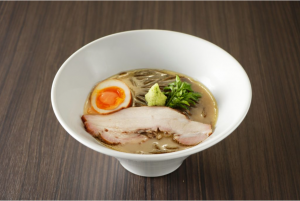
A Rooibos twist on one of Japan’s best-loved dishes. Ramen is a deeply rooted part of Japanese food culture, with countless regional variations enjoyed across the country. Here, Rooibos finds its way into the bowl, adding a distinctive South African touch to a kombu-and-shiitake dashi, while also being used to marinate the egg.
Clinton Gass, Managing Director of Japan-based Rooibos Marketing Ltd and Owner of Gass Co Ltd, has long been involved in the development of the Japanese market. He says the breakthrough came when the product was repositioned from a medicinal drink to a speciality tea.
“By setting up a business in Japan to distribute and market Rooibos we were able to change the positioning of Rooibos,” Gass said. “The tea purists in the Japanese market loved it and exports increased significantly.”
That shift in positioning helped open the door to a much broader role for Rooibos in Japan. Over more than four decades, it has moved from a specialist health product to an everyday beverage found in homes, convenience stores, cafés and restaurants. Japan’s embrace of Rooibos extends well beyond ramen. Starbucks Japan introduced a Rooibos Tea Latte as a regular menu item at its specialist Tea & Café stores in 2023. The drink combines Rooibos with milk and vanilla flavouring and is available hot or iced.
But the creativity goes further than the familiar latte. In 2024, Dean & Deluca Japan combined Rooibos milk tea with satsumaimo, Japan’s seasonal sweet potato, in a Sweet Potato Latte – a distinctly Japanese pairing that shows Rooibos being used as a flavour ingredient in its own right.[2]
 >The Japanese arm of the international gourmet food and café brand, DEAN & DELUCA, with stores across major cities, brings Rooibos together with seasonal satsumaimo (Japanese sweet potato) in this inventive latte
Britain: A cuppa for every taste
Rooibos has long had a strong following in Britain, where it has become an established part of Britain’s diverse tea and infusion culture, valued for its naturally caffeine-free character and distinctive flavour. Dr Sharon Hall, Chief Executive of the UK Tea & Infusions Association (UKTIA) and President of Tea & Herbal Infusions Europe (THIE) says the wider herbal and fruit infusion category, which includes Rooibos, is attracting a younger consumer base, with wellness playing an increasingly important role.
“Today’s consumers are increasingly adventurous in their beverage choices bringing fresh interest to the herbal and fruit infusions category through a desire of flavour exploration, wellness and variety. Rooibos is particularly well-positioned to meet this demand, whether enjoyed on its own, blended with other botanicals or featured in innovative formats that appeal to younger audiences,” she says.
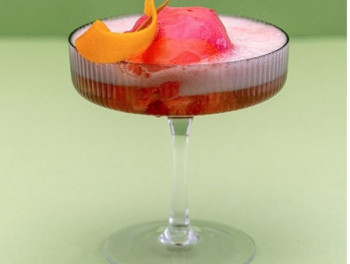
In Britain, Rooibos is also finding its way into an increasingly diverse range of creations. Tick Tock, the family-owned tea brand credited with helping introduce Rooibos to the UK in the 1970s, has built a strong presence in the market and its recipe collection showcases some of the ways the ingredient can be used – from Rooibos iced tea and kombucha to an Aperol Spritz Rooibos iced tea and Earl Grey Rooibos ice cream.[3]
.jpg)
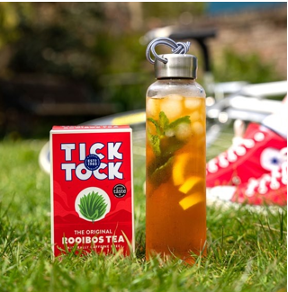

Photos courtesy of Tick Tock
From refreshing, iced drinks to sorbet and ice cream, Tick Tock is showcasing some of the creative ways Rooibos is being enjoyed in Britain.
Europe: giving Rooibos a local twist
Across continental Europe, Rooibos is appearing in a variety of flavour combinations and formats. In Germany, Rooibos is primarily enjoyed as a hot herbal infusion and is particularly popular as a base for flavoured blends. Combinations with vanilla, caramel, citrus, spices and other flavourings have been established on the market for many years and continue to attract consumers. Rooibos is also used in baking and a variety of culinary applications.
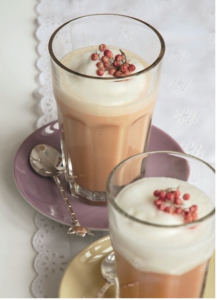
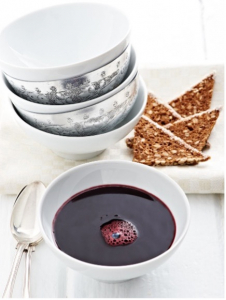

Photos courtesy of teeverband.de
Rooibos adds a South African touch to familiar German favourites. From a Rooibos-soya latte macchiato to a sweet potato and chickpea curry infused with Rooibos, and elderberry soup given a subtle Rooibos twist, these recipes show how the naturally mild, slightly sweet flavour of Rooibos can complement both modern creations and longstanding regional tastes.
In France, Rooibos is also finding its way into desserts, drinks and creative cocktails. One inventive example pairs Rooibos-infused cherries with a refreshing fromage blanc sorbet, using the tisane to add a subtle depth of flavour to the fruit.
The “Tea Time du Syndicat”, a Rooibos-based cocktail created by Paris cocktail bar Le Syndicat, combines Rooibos with lime, sugar syrup and sparkling water and has become a popular choice among French cocktail drinkers. Another local favourite is Rooibos Ale, a Cognac-based cocktail that blends Rooibos with lemon, ginger ale, orange and lime.
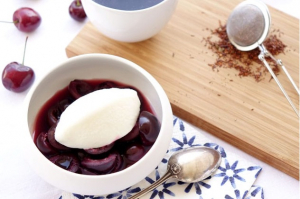

A taste of Rooibos in France: Rooibos-infused cherries with fromage blanc sorbet, alongside the “Tea Time du Syndicat”, a popular Rooibos cocktail created by Paris bar Le Syndicat.
Hall says this kind of experimentation reflects a broader evolution in the European herbal and fruit infusion category, where brands are exploring distinctive flavour combinations and new consumption occasions.
“New flavours appearing are much more unique to brands with combinations chosen because of their health benefits,” she says.
For Rooibos, this creates scope to move between familiar and unexpected applications. Its naturally caffeine-free character and mild, slightly sweet flavour allow it to work with fruits, spices and other ingredients, giving brands and consumers plenty of room to experiment.
North America: the rise of the ‘red latte’
Across Canada and the US, Rooibos is increasingly being used as a flavour and beverage platform rather than simply an infusion, with applications including milk-based lattes, mocktails, cocktails and functional-wellness blends.
In Canada, Rooibos products include dessert-inspired flavours, such as cinnamon chai and the former “Jelly Donut” Rooibos. In the US, Rooibos lattes or “red lattes” and “red espressos” are used as caffeine-free alternatives to coffee, often combined with steamed milk, honey, vanilla or cinnamon.
Rooibos also features in punches and cocktails, including a South African-style mango Rooibos mint punch and a Rooibos-chai bourbon cocktail.
Shabnam Weber, President of the Tea & Herbal Association of Canada and the Tea Association of the USA, says the boundaries between traditional beverage categories are becoming increasingly fluid.
“Today’s consumers don’t necessarily think in terms of choosing between tea or coffee. They’re looking for beverages that suit a particular mood, moment or need, and they’re willing to explore ingredients and formats that offer something different. Rooibos fits naturally into that space because it can be enjoyed on its own, combined with other flavours or used as the foundation for something completely new,” she says.
What makes Rooibos’ global journey so remarkable is that, while it remains deeply rooted in South Africa, it continues to evolve as people around the world make it their own. As du Toit puts it, this evolution is a reflection of Rooibos’ enduring appeal.
“There’s something quite special about seeing a product that is so deeply connected to South Africa being embraced and reimagined by people around the world. They’re not changing what Rooibos is – they’re discovering what else it can be. And that gives our heritage product a whole new relevance,” she says.
As South Africa celebrates its heritage this September, Rooibos is a reminder that heritage is not only about preserving the past, but also about how traditions continue to evolve, travel and find new meaning with each generation.
ENDS
Issued by Meropa Communications on behalf of the SA Rooibos Council. For further information, please contact Brigitte Taim from Meropa on 082 410 8960 or email: brigittet@meropa.co.za
[1] https://sarooibos.co.za/as-exports-grow-rooibos-maintains-course-amid-climate-and-trade-pressures/
[3] Tea Times Trading UK
© Copyright 2026 - UK Tea and Infusions Association,
c/o Food & Drink Federation
6th Floor, 10 Bloomsbury Way
London, WC1A 2SL